


I Spent Years Fighting Authority. Here's What I Learned.

A question worth asking from time to time is this:
Who are the authority figures in your life, and what kind of relationship do you have with them?
Are you the type who naturally follows someone's lead?
Or do you resist being told what to do?
For most of my life, I fell into the second category.
From the time I was a little girl until well into adulthood, I had a complicated relationship with authority.
For me, authority figures included parents, teachers, bosses, principals, security guards, and even the government.
If there was a rule, there was a good chance I was questioning it.
If someone told me what to do, there was a part of me that immediately wanted to do the opposite.
Looking back, I can laugh at some of the memories.
Like the time I was five or six years old and decided I was so angry that I was going to "run away from home." I packed a backpack and planned to spend the night in a bush somewhere.
Or the many times I was sent into the hallway at school because I had attitude with a teacher. Sometimes I would hide behind corners so the principal wouldn't see me sitting there.
Or when I skipped classes in high school and rushed home before my parents got there so I could forward the house phone to my cell phone. The goal? Prevent them from receiving the automated message saying:
"A student in your household missed periods one, two, three, and four."
If you know, you know.
Then there was the job I hated so much that I walked past my boss's office, left without notice, and didn't look back.
And during the COVID pandemic, I ended up getting a ticket at a hockey game after refusing to wear my mask properly. Security followed me around the arena until they finally asked for my ID and wrote me up.
These are only a few examples, but they all point to the same thing:
I hated being told what to do.
At the time, it felt empowering.
There is something intoxicating about rebellion.
The adrenaline rush of getting away with something.
The feeling of independence.
The sense that you're standing up for yourself.
The belief that you're taking control of your own life.
When I rushed home to hide that school phone call, I felt clever.
When I argued with authority figures, I felt important.
When I walked out of that job, I felt powerful.
When I challenged people whose opinions differed from mine, I felt righteous.
But years later, I've realized there was something I failed to see.
I rarely stopped to put myself in the other person's shoes.
As a child, I didn't think about how worried my parents would be if I skipped school.
As an employee, I didn't think about what it would be like to suddenly lose a staff member without notice.
As someone arguing politics, I didn't consider that the other person felt just as strongly about their beliefs as I did.
And those security guards at the hockey game?
Whether I agreed with the rules or not, they were simply doing the job they had been given.
The truth is, it's easy to criticize authority when you've never carried its responsibility.
I learned that lesson the hard way.
When I became a teacher, I finally got a glimpse of what it feels like to be the person in charge.
And guess what happened?
I got that student.
The one with attitude.
The one who rolled their eyes.
The one who challenged everything.
The one who reminded me of myself.
Suddenly, I wasn't looking at authority from the hallway anymore.
I was standing at the front of the classroom.
And I realized something uncomfortable:
It's easy to want authority.
It's much harder to carry it.
Because authority isn't just control.
It's responsibility.
It's accountability.
It's making decisions that affect other people.
It's trying your best while knowing you'll sometimes get it wrong.
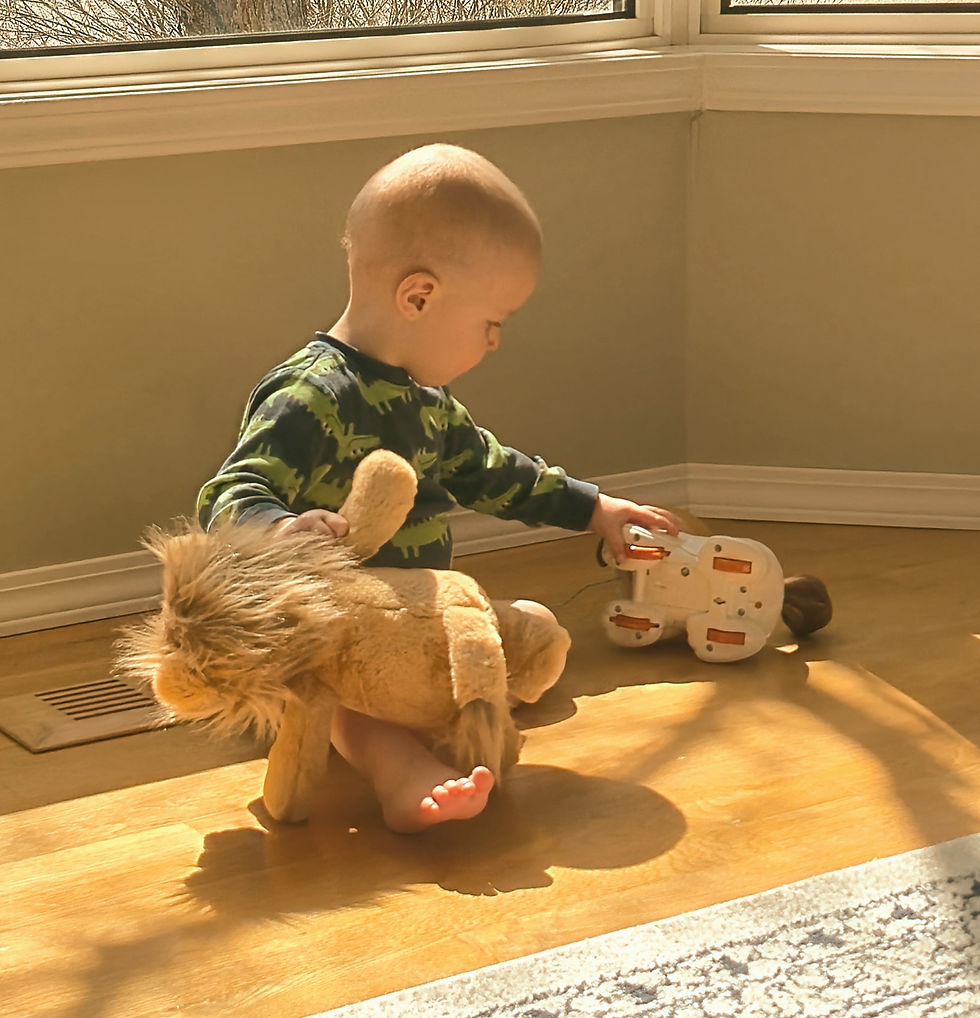
I felt that same weight again when I left the hospital with my newborn baby.
I remember holding him and realizing:
"I'm responsible for this little life."
Not just for a day.
Not just for a week.
Every day.
For years.
The responsibility felt enormous.
And for the first time, I understood something I hadn't grasped before.
The people who have authority over us often carry burdens we can't see.
That doesn't mean authority figures are always right.
They're not.
Parents make mistakes.
Teachers make mistakes.
Bosses make mistakes.
Governments make mistakes.
I know because I've been in positions of authority myself, and I've made mistakes too.
There were times as a teacher when I lost my patience.
Times when I wondered later, Was that fair?
Times when I wished I had handled things differently.
This isn't a post about feeling guilty for every rebellious thing I've ever done.
It's about recognizing that every position comes with its own challenges.
The child and the parent.
The employee and the boss.
The student and the teacher.
The citizen and the leader.
There are always two sides to the story.
And when human authority inevitably disappoints us—which it will—we're left searching for something greater.
As a Christian, I've come to believe that every earthly authority figure is imperfect because every earthly authority figure is human.
Only God is not.
He is the One I can turn to when I don't know what to do.
When I feel misunderstood.
When I feel wronged.
When I wonder whether I've crossed a line.
When I want justice.
When I need wisdom.
Over time, I've also had to confront another uncomfortable truth.
Sometimes my rebellion wasn't about principles.
It was about pride.
Sometimes I wanted attention.
Sometimes I wanted to prove a point.
Sometimes I wanted to teach someone a lesson.
Sometimes I simply wanted to win.
But maturity has taught me that not every battle is mine to fight.
Some lessons belong to God.
Some outcomes belong to God.
And some situations require humility more than they require being right.
That doesn't mean we should blindly follow authority.
Discernment matters.
There are times when authority figures cross lines.
There are times when those under authority cross lines too.
Learning the difference takes wisdom, humility, and practice.
I'm still learning.
But one thing I've discovered is this:
The older I get, the less interested I am in winning power struggles and the more interested I am in understanding people.
Because behind every authority figure is a human being.
And behind every rebellious heart is one too.



Comments